

European petchem plant closures: What this means for Saudi producers

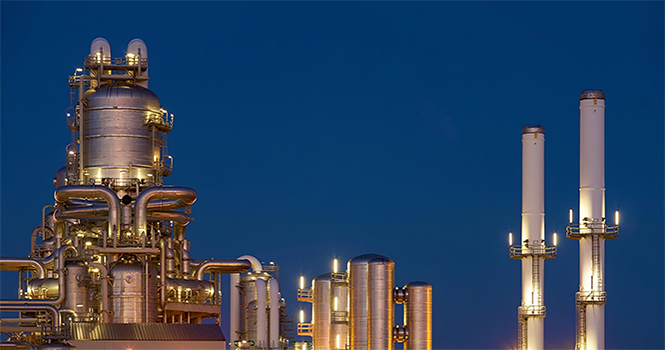
The restructuring of Europe’s petrochemical industry is accelerating amid high energy and feedstock costs, weak demand, and intensifying global competition, prompting major companies to cut production or shut industrial assets.
Energy and feedstock costs are among the key sources of pressure. Average gas prices in Europe during the period January-April 2026 were around 3.3 times their levels in the US, according to the European Chemical Industry Council (Cefic), while chemical capacity utilization in the European Union remained at historically low levels of 74-75%.
Competitiveness is not only affected by gas prices. A large proportion of European crackers rely on naphtha, alongside pressures related to emissions costs and compliance with climate policies. Meanwhile, a number of Middle Eastern producers enjoy a cost advantage due to feedstock availability and industrial integration.
Total announced chemical capacity closures in Europe from 2022 through the end of 2025 reached around 37 million tons per year, equivalent to approximately 9% of the sector’s total production capacity, according to a report prepared by Roland Berger for Cefic.
However, the exit of this capacity does not necessarily mean that an equivalent supply gap will emerge that can be filled by producers outside Europe, as this depends on the type of product, demand levels, spare capacity, and global competition.
Analysts who spoke to Argaam said the closures create an opportunity for Saudi and Gulf producers, particularly in ethylene derivatives, led by polyethylene, but could also result in higher exports without a corresponding improvement in profit margins.
Weak Demand Limits the Impact of Closures
The closures are taking place while European demand remains weak, limiting the extent to which declining local production translates directly into additional imports.
According to Cefic data, the value of EU chemical imports fell 15.7% year on year in Q1 2026, while exports declined 12.4%.
During the first half of the year, the pace of decline moderated, with the value of imports falling 5.9% and exports 6.3%, while import volumes declined 12% and exports 6%.
The latest Cefic data showed that the trend continued from January through July 2026, with the value of imports down 3.1% and exports 4.2%.
This means that the contraction in European production has not yet translated into a broad increase in imports. Instead, it has coincided with a slowdown in industrial activity and weak consumption, making the direction of demand a key factor in determining who benefits from plant closures.
37M Tons of Announced Capacity Closures
According to a report prepared by Roland Berger for Cefic, total production capacity announced for closure in the European chemical industry between 2022 and the end of 2025 reached around 37 million tons per year, equivalent to nearly 9% of European chemical capacity.
Petrochemicals accounted for 17.8 million tons, or 48%, of the announced closures, followed by basic inorganic chemicals at around 11.7 million tons, polymers at 5.4 million tons, and specialty chemicals at around 2 million tons.
This figure does not represent a fully replaceable production gap, as it covers multiple chemical sectors rather than petrochemicals alone. Some closures were also driven by excess capacity and weak demand rather than a supply shortage in the market.
One prominent example is TotalEnergies’ decision to shut down its oldest steam cracker in Antwerp by the end of 2027. The company said the decision came amid expectations of a significant ethylene surplus in Europe, in addition to a key customer’s decision not to renew its contract to purchase the unit’s output after 2027.
INEOS: The Latest Example
INEOS’s decision in September 2026 to idle its three acetyls production units in Hull, UK, was one of the latest signs of pressure on the European industry.
The company said on September 22 that gas prices in Europe were then around 12 times their levels in the US and that it had decided to place the three units on hold until further notice.
Two units had already been shut down, while the third was scheduled to stop within days.
According to company data, the complex has the following annual capacity:
|
Product |
Annual capacity |
|
Acetic Acid |
500,000 tons |
|
Acetic anhydride |
150,000 tons |
|
Ethyl acetate |
200,000 tons |
INEOS’s situation differs from permanent closures, as the company has placed the units on hold until further notice, meaning they could return to production if operating economics improve.
Wave of Cracker Closures
Among the key restructuring and closure decisions involving European crackers in recent years are:
|
Company |
Location |
Asset |
Status |
Estimated Ethylene Capacity |
|
ExxonMobil |
Gravenchon, France |
Steam cracker |
Closed in 2024 |
425,000 tons/year |
|
SABIC |
Geleen, Netherlands |
Olefins 3 |
Closed in 2024 |
550,000 tons/year |
|
Eni – Versalis |
Brindisi, Italy |
Steam cracker |
Closed in 2025 |
410,000 tons/year |
|
Eni – Versalis |
Priolo, Italy |
Steam cracker |
Closed in 2025 as part of site restructuring |
430,000 tons/year |
|
Dow |
Böhlen, Germany |
Ethylene cracker |
Scheduled for closure in Q4 2027 |
Around 540,000 tons/year |
|
TotalEnergies |
Antwerp, Belgium |
Oldest steam cracker |
Scheduled for closure by end-2027 |
Around 550,000-580,000 tons/year |
These cases show that the closures are not uniform. Some are permanent, while others are part of broader industrial restructuring. INEOS’s case represents an idling that could, in principle, be reversed if operating economics improve.
What Does This Mean for Saudi Producers?
The opportunity for Saudi producers does not lie in fully replacing the European capacity exiting the market. Rather, it lies in capturing shares in specific products when declining local production translates into actual import demand, while maintaining competitive cost advantages, exportable capacity, and freight costs.
SABIC provides an example of capital reallocation in the sector. In August 2026, it announced the sale of its petrochemical businesses in Europe as part of a portfolio optimization program aimed at focusing on higher-return assets and markets, while reaffirming its commitment to serving global customers.
Lower direct ownership of industrial assets in Europe does not necessarily mean a decline in Saudi producers’ ability to sell into the European market, as customers can be served through exports from more competitive production sites.
Acetyls: An Opportunity Linked to INEOS’s Closure
INEOS’s idling of its facilities in Hull represents an example of an opportunity that could emerge from the exit of European capacity in acetic acid, acetic anhydride, and ethyl acetate, potentially opening the door for external suppliers if demand remains in place.
However, the opportunity remains limited by competition from the US and Asia. In addition, INEOS’s units have been idled rather than permanently closed, meaning they could return to production if operating economics improve.
Ethylene Derivatives Offer the Broadest Opportunity
Beyond the acetyls case, analysts believe ethylene derivatives, particularly polyethylene, represent the clearest opportunity for Gulf producers as European cracker capacity declines.
Jai Patel, an industrial economist at Oxford Economics, told Argaam that there is an opportunity for Saudi producers, but it is narrower and slower to materialize than the announced closure figures might suggest.

Jai Patel, Industry Economist at Oxford Economics
“Most European capacity reductions are concentrated in ethylene crackers, while Saudi producers export more ethylene derivatives rather than ethylene itself. Therefore, gains are expected to emerge mainly in polyethylene, and to a lesser extent in polypropylene and methanol,” said Patel.
He noted that polyethylene is the clearest beneficiary, given that Gulf producers already export significant volumes to Europe and enjoy a cost advantage in its production.
Joe Douaihy, an economist at Coface, agreed that the main opportunity lies in ethylene derivatives, particularly high-density polyethylene (HDPE), low-density polyethylene (LDPE), and linear low-density polyethylene (LLDPE).

Joe Douaihy, an economist at Coface
Douaihy told Argaam that Gulf producers benefit from lower ethane costs, estimating that their cost of producing ethylene is around one-quarter to one-third of the European cost.
This advantage has given Gulf suppliers an important position in the European market, with the region accounting, according to his estimates, for around one-quarter of Europe’s polyethylene imports in recent years, he added.
However, he noted that they will not capture the entire share left by European capacity exiting the market, given strong competition from US producers, who also benefit from low-cost ethane.
Smaller Opportunity in Polypropylene and Aromatics
Douaihy said the opportunity appears less clear in polypropylene, aromatics, and downstream products, as reliance on ethane does not produce large volumes of propylene or aromatics.
He explained that Gulf countries have developed their polypropylene capacity through propane dehydrogenation (PDH) units, but the cost advantage in these products is not as strong as the advantage in ethylene and its derivatives.
Asian producers also represent strong competition in these markets, limiting Gulf producers’ ability to turn European closures into direct market-share gains.
Ethylene Itself to Benefit Less
As for ethylene itself, the greater difficulty and cost of transporting it compared with a number of finished derivatives makes it unlikely that every ton of closed European capacity will be replaced by ethylene imports.
Patel said this characteristic further supports opportunities in ethylene derivatives, led by polyethylene, rather than in the commodity ethylene itself.
Freight Could Delay the Benefits
Patel believes freight is currently one of the key constraints on Saudi producers’ ability to benefit from European plant closures.
He said that disruptions in the Strait of Hormuz and Red Sea routes are limiting producers’ ability to deliver volumes to Europe reliably, noting that stable export routes are a prerequisite for a meaningful increase in Saudi shipments to the continent.
Douaihy agreed that disruptions in the Strait of Hormuz are limiting Gulf producers’ ability to fully capitalize on the opportunity in the short term.
The cost differential remains a key factor, as the Saudi producer’s competitiveness improves when its cost advantage over European producers reliant on naphtha is sufficient to cover the cost of shipping to Europe, according to Patel.
US Competition Is the Main Challenge for Gulf Producers
Despite the Gulf’s feedstock cost advantage, Saudi producers do not enter the European market without competitors that enjoy similar advantages.
Douaihy said that US producers are the main competitors to Gulf countries in the European polyethylene market, given their access to low-cost ethane.
Patel added that China is another competitive factor, particularly as excess capacity persists and Asian producers retain the ability to compete on price in a number of products.
He noted that if price competition remains intense, European closures could lead to higher Saudi export volumes to Europe without a corresponding improvement in margins.
Thus, the decline in European production could redistribute market shares among the Gulf, the US, and Asia, rather than necessarily transferring the entire share of exiting European production to Gulf producers.
Recovery in Construction and Auto Sectors Needed for Higher Imports
Douaihy said the reduction in European production capacity will not automatically translate into higher Gulf exports. A meaningful benefit requires a recovery in demand from European downstream industries, particularly construction and automotive.
If demand rises while European production capacity remains permanently low, a supply gap will emerge that will need to be covered through imports, putting Gulf producers in a strong position to capture part of that gap, he added.
The analyst also noted that any disruption to US or Chinese supplies could further strengthen the position of Gulf producers in the European market.
Higher-Value Products Offer Another Route to Better Margins
Douaihy said improving margins requires a different path from simply increasing export volumes of commodity products.
He added that Gulf producers need to move further toward specialized, higher-value products targeted at specific industrial applications.
“Regional production already exists in areas such as polyurethane and MDI at companies including SABIC and Sadara, but remains limited compared with the size of the region’s basic petrochemical base,” he stated.
Will Europe Become More Reliant on Imports?
Douaihy expects Europe to become structurally more reliant on petrochemical imports in the coming years, although weak demand could delay the emergence of this shift in the short term.
Europe already imports ethylene-based products such as polyethylene, in addition to relying on imports of crude oil used to produce naphtha, he said.
The analyst added that rebuilding large commodity-product capacities in Europe may not be economically viable under the current cost structure. This is likely to push the European industry further toward specialized and higher-value products, alongside greater reliance on imports of basic products.
How Large Could Additional Demand Be?
Patel said it is realistic for Middle Eastern producers to capture part, but not most, of the new European demand for imports, given competition from the US and Asia.
Accurately determining the size of additional demand resulting from the closures remains difficult at this stage, he added.
European trade data support this cautious view, as imports have so far declined alongside lower production, indicating that the direction of demand will remain a decisive factor in determining the actual size of the supply gap.

Market Indices
About Us
Join Us

Comments {{getCommentCount()}}
Be the first to comment
رد{{comment.DisplayName}} على {{getCommenterName(comment.ParentThreadID)}}
{{comment.DisplayName}}
{{comment.ElapsedTime}}